Dreaming of big skies, privacy, and mountain views on your own acreage near Ruidoso? Buying land in Ranches of Sonterra can be a smart move, but it pays to know the rules and realities before you write an offer. From wells and septic to road maintenance and building approvals, a few early checks can save you time, money, and surprises. In this guide, you’ll learn the key steps to take and the rules that shape what you can build and when. Let’s dive in.
Where Ranches of Sonterra fits in Alto
Ranches of Sonterra sits in the Alto area of Lincoln County, within ZIP 88312. It is a large, deed-restricted subdivision with a mix of gently rolling and steeper terrain. Many lots offer long views toward Sierra Blanca.
Typical parcels in the market run from about 5 to 25 acres, which gives you flexibility for home placement, barns, or guest space. Elevation across Alto runs high, so you can expect crisp air, four seasons, and the chance for winter weather.
If you are view driven, use elevation and slope data to plan likely building pads and sight lines. A simple way to start is to review local topography for Alto and map how trees, slope, and neighboring envelopes could affect your view corridor. A helpful reference for area elevation is the Alto topographic map, which shows ridges and valleys you will feel on site. You can scan it here: Alto topographic reference.
HOA, CC&Rs, and what they mean for you
Ranches of Sonterra is governed by recorded Covenants, Conditions, and Restrictions. Membership in the property owners association is mandatory for all tracts. Most new improvements require Architectural Review Committee approval before you start work. You can read the current recorded rules in the 2020 Amended CC&Rs.
Membership and approvals
When you buy a tract, you join the ROS Property Owners Association. The CC&Rs and bylaws describe how the association enforces rules and how the Architectural Review Committee reviews plans. Expect to submit site plans and exterior details for new builds and many site improvements. Wells and septic plans must also be submitted to the ARC, even though permits are issued by state agencies.
Key building rules that shape your plans
Several design standards will influence your home plans and budget:
- Minimum primary residence size is 1,500 square feet of heated living space.
- Residential structures are limited to two stories and 32 feet in height.
- Setbacks include 25 feet on sides, 50 feet at the rear, and 100 feet from any public road right of way.
- Detached guest houses must be at least 500 square feet, must be served by utilities, and cannot be used as rental units.
- Outbuildings are limited to three in addition to the main dwelling. Lots over 10 acres may add one more permanent structure.
These standards narrow your building envelope, so it helps to walk the lot with a tape, survey flags, and a current plat in hand.
Timing for construction and site cleanup
The CC&Rs require most specified improvements to reach a finished exterior within 18 months of start. Exempt improvements have a 12 month window. The rules spell out what counts as finished, including removal of rubble, slash, and excess dirt. If your build will take longer, request a variance before the deadline so you stay in good standing.
Uses and rental rules to note
Manufactured and mobile homes are prohibited. RV use and camping are limited, and there are defined rules for temporary RV use during construction. Rental activity is regulated under the CC&Rs, so if you plan to rent, review the document and confirm details with the association.
Utilities, wells, and septic: plan early
No community water or sewer
There is no community water or sewer service in Ranches of Sonterra. Each owner is responsible for a domestic well and an on-site wastewater system that meets state rules. This is one of the most important facts to budget and plan for. The association’s rules confirm these requirements in the recorded CC&Rs.
Wells and water allowances
Domestic well permits are issued by the Office of the State Engineer. The CC&Rs reference different diversion allowances for wells permitted before and after August 15, 2006. Pre-2006 domestic wells are noted at up to 3 acre-feet per year, while wells permitted after that date are noted at up to 1 acre-foot per year. Because rules can be complex, contact the State Engineer’s office for the most current guidance and to review nearby well logs.
Septic design and permits
All on-site wastewater systems must meet New Mexico’s on-site liquid waste rules. That includes a soil and site evaluation, an Authorization to Construct, and installation by a licensed professional. Your soil conditions will determine whether a conventional or engineered system is required. You can review the governing standards here: New Mexico on-site liquid waste rules (20.7.3 NMAC).
Power and gas
Electric service in the Ruidoso and Ruidoso Downs area is listed under PNM in county planning documents, and natural gas for the Ruidoso and Alto area is listed under Zia Natural Gas. Actual availability and cost to extend lines vary by lot, so confirm the nearest service point and any extension policy before you close. For utilities and permitting context, see the Lincoln County Comprehensive Plan.
Roads and access you should confirm
County roads vs private roads
The CC&Rs state that subdivision roads were accepted as county roads in the late 1990s. They also note that some private roads exist and that the property owners association has no authority or responsibility for private road entities. For each property you consider, verify whether your access is county maintained or private and whether there is a recorded road maintenance agreement. The road status language appears in the CC&Rs.
Driveway and culvert requirements
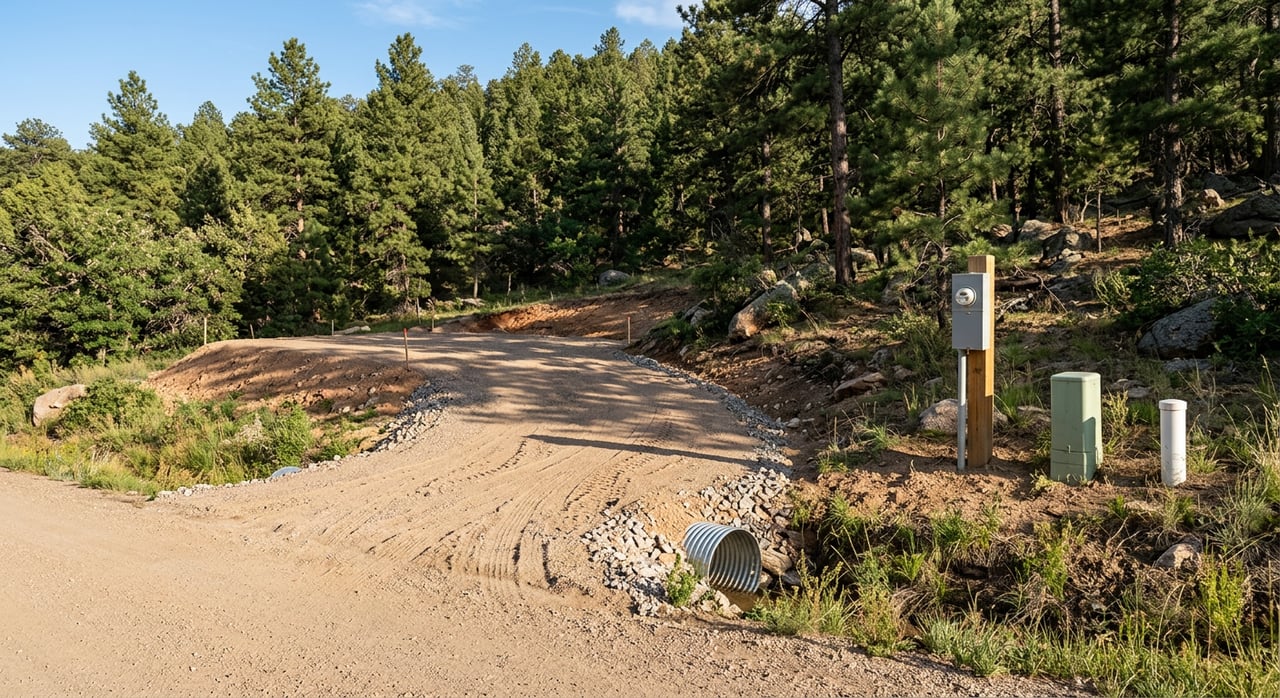
At the start of construction, driveways must have at least 4 inches of base course to control mud transfer onto roads. Culverts placed in county ditches require association approval and a permit from the Lincoln County Road Superintendent. Build these items into your site prep budget.
Winter access and emergency response
Subdivision roads were designed for 24 foot surfaced roadways with 2 foot gravel shoulders, and the CC&Rs state that conventional vehicles can usually access properties in most weather conditions. That said, mountain snow and ice can affect travel for short periods. Confirm seasonal maintenance levels with the county, and plan driveway grades and surfacing with emergency access in mind.
Site conditions that change cost
Slope and foundation
Steeper, hillside lots tend to raise costs for earthwork, retaining walls, and foundations. Gentle slopes make it easier to place the home, driveway, and septic. Before you get attached to a design, walk the lot with a builder and consider ordering a topographic and geotechnical survey.
Riverfront and drainage
Some tracts sit along the Bonito River or seasonal drainages. These settings can be beautiful but may include floodplain areas or setbacks that reduce your buildable envelope. Run a FEMA flood check and speak with county floodplain staff if the lot is near a waterway. The county plan also highlights stormwater and drainage as ongoing local concerns, which is relevant to riparian parcels.
Trees and wildfire
Ranches of Sonterra promotes Firewise practices, and the CC&Rs permit tree thinning and slash removal in defined contexts. Plan for defensible space, driveway clearing for emergency vehicles, and ongoing maintenance. You can find Firewise and HOA updates on the official HOA site. For local fire contact references across Lincoln County, a handy directory is here: Lincoln County fire departments.
Views and neighbor impact
Setbacks, height limits, and tree cover on neighboring parcels can influence your views. Identify a likely building envelope and confirm where your closest neighbors could build under the same rules. Ask the HOA if there are recent ARC approvals nearby to see common materials, roof heights, and placement patterns.
Value drivers and tradeoffs to weigh
Privacy, panoramic Sierra Blanca views, and proximity to Ruidoso recreation are key value drivers. Larger tracts can often support horses or small livestock under the CC&Rs, which adds appeal for ranchette buyers. River adjacency or big ridgeline views can command a premium.
Tradeoffs to plan for include the cost and timing of wells and septic systems, possible line extensions for electric or gas, and the mixed nature of road maintenance across county and private roads. Water availability and well allowances also affect long-term value. The minimum home size of 1,500 square feet helps protect neighborhood character, but it also raises the floor on build costs.
Use maps and records to choose the right lot
Before you tour, scan the subdivision map for a quick sense of street layout, creeks, and parcel shapes. It is a helpful way to pre-screen lots for access, terrain, and potential view angles. Start with the HOA’s Ranches of Sonterra map. For final decisions, always pull the recorded plat and any easements from county records.
Your step-by-step due diligence checklist
Use this quick list to compare parcels and reduce surprises:
Confirm the legal description, recorded plat, and the full, recorded CC&Rs, including the 2020 amendment. Keep a copy of the 2020 Amended CC&Rs.
Ask Lincoln County which roads to the lot are county maintained and which are private. If private, request any recorded road maintenance agreement and check for special assessments.
Verify whether the lot has a permitted well or septic. If not, order a septic site evaluation and percolation test and consider a topographic and geotechnical survey. For design standards, review New Mexico’s on-site liquid waste rules.
Contact the Office of the State Engineer to review nearby well logs and confirm the status of any existing or proposed domestic well permit. Note the CC&R references to pre and post August 15, 2006 well allowances.
Request the Architectural Review Committee application packet from the HOA. Ask about current dues, recent approvals near your lot, and any pending enforcement actions.
Call utility providers to confirm the nearest electric and natural gas service points, extension policies, approximate costs, and any required easements. For context on primary providers and permits, see the Lincoln County Comprehensive Plan.
If the lot is near the Bonito River or a drainage, run a FEMA flood map check and speak with county floodplain staff. Order an elevation certificate if needed.
Confirm the building permit pathway for unincorporated Lincoln County and the inspection schedule under state rules. Plan for licensed contractors and trade permits.
Budget for wildfire mitigation and driveway access improvements. Review Firewise materials on the HOA site, and verify the nearest fire response resources.
Run title and tax checks with the county to confirm that there are no liens, unpaid assessments, or other encumbrances.
How the Hamilton Team helps you buy smarter
Buying land here is different from buying a city lot. The best outcomes come from clear plans, realistic budgets, and early checks with the right agencies. As local specialists in Alto and Ruidoso, we help you compare parcels, read the CC&Rs against your goals, coordinate site evaluations, and keep your timeline on track from offer to closing. If you want a second set of eyes on buildability, views, and access, we are here to guide the process.
Ready to explore lots in Ranches of Sonterra or nearby Alto communities? Connect with the Hamilton Team to Book a Consultation. We will help you narrow the field, avoid pitfalls, and move forward with confidence.
FAQs
What utilities are available for land in Ranches of Sonterra?
- There is no community water or sewer, so plan for a private well and an NMED-permitted septic; power is typically by PNM in the area and natural gas by Zia Natural Gas, but verify availability and extension costs for your specific lot.
How does the HOA approval process work in Ranches of Sonterra?
- Most new improvements require Architectural Review Committee approval, with site and exterior details submitted before work begins; wells and septic plans must also be submitted to the ARC while permits are handled by state agencies.
Are manufactured homes or RVs allowed in Ranches of Sonterra?
- Manufactured and mobile homes are prohibited; RV use and camping are limited, with specific rules for temporary use during construction and required hookups.
Who issues building permits for unincorporated parts of Lincoln County?
- The State of New Mexico issues building permits for unincorporated areas, while villages and cities may handle permits within their limits; confirm current steps with the county and the Construction Industries Division.
What are the minimum house size and setbacks in Ranches of Sonterra?
- The minimum primary residence is 1,500 square feet of heated living space, with 25 foot side setbacks, 50 foot rear setbacks, and 100 feet from a public road right of way.
How are roads maintained in Ranches of Sonterra?
- Many subdivision roads were accepted as county roads in the late 1990s, but some are private; confirm maintenance responsibility and any road maintenance agreement for your specific access route.